From Chaos to Clarity: Communicating During a Cyber Crisis
When ChipSoft was hit by a cyberattack, it had immediate consequences for general practitioner practices in the Netherlands: systems went (partly) down and processes stalled. A number of Dutch hospitals also proactively shut down their systems. While the operational damage is immediately visible in such cases, something less visible is also taking place.
Uncertainty arises on the work floor. Not only in affected practices, but also in hospitals and institutions where technically nothing was wrong. Employees saw systems fail or heard the news externally and wondered: what should I do now? What does this mean for us? That moment, between the attack and the first internal message, is exactly where a cyber crisis escalates. Not in the servers, but in the hallways. Although this example comes from healthcare, the underlying pattern is universal.
The visible and the invisible crisis
A cyberattack causes two types of crisis. The operational crisis is visible: systems go down, processes stall, and employees are unable to perform their work properly.
The information crisis is less visible, but at least as disruptive. Uncertainty arises as soon as it is unclear what exactly is happening, what the impact is, and what is expected of employees. Even organizations where technically nothing goes wrong are confronted with this. Employees receive a push notification with breaking news from a news site or hear something from a colleague and try to make sense of what is happening themselves. Rumors spread faster than official communication. Missing information is filled in with assumptions, and those assumptions often circulate before there is internal clarity. It is precisely in this phase that the challenge lies in quickly providing clear, reliable instructions and information, so that damage is limited and unrest does not spread unnecessarily, even if nothing is actually wrong. It is better to send one message too many than to leave room for noise.
The problem: one-time communication that does not reach everyone
Effective communication during a crisis is complex. Staff work in offices, at locations without PCs, remotely, and so on. Many are not near a PC for hours at a time. Traditional tools such as intranet and email therefore fall short. These are channels that employees must actively open on a PC, and that simply does not happen for those who do not have (or not always have) access to a PC, and almost never immediately for the rest. In addition, communication often remains limited to a single message that quickly gets lost in the daily overload of communication.
The result is an information gap: a small part of the organization is informed, while the rest is left in the dark. And it is precisely in that gap where the unnecessary damage and unrest you want to prevent arise.
Communication that reaches everyone everywhere is a must
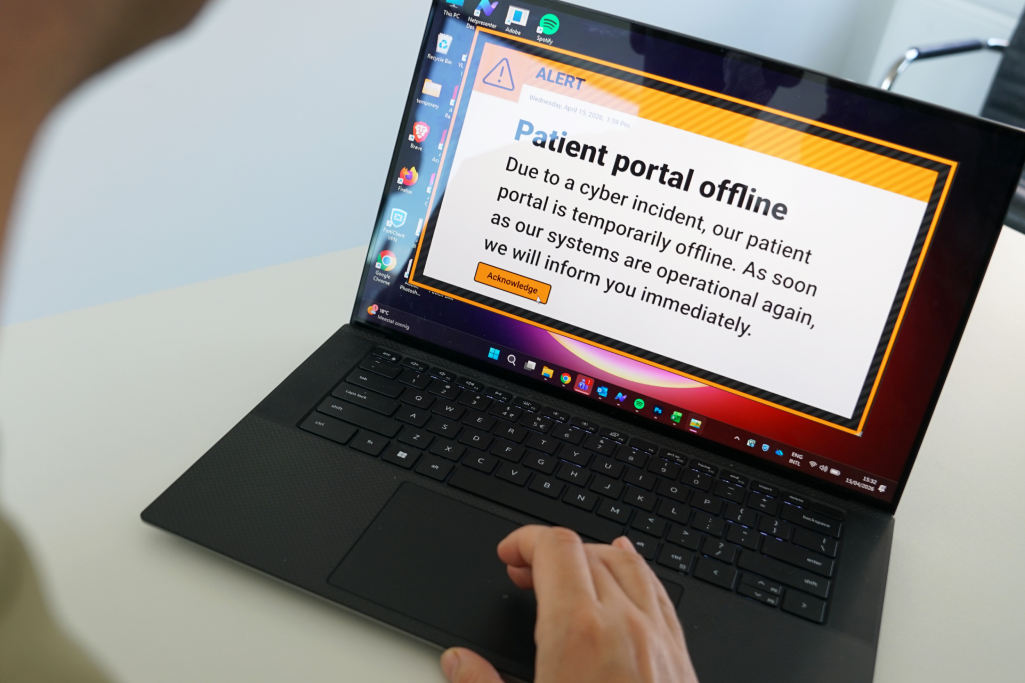
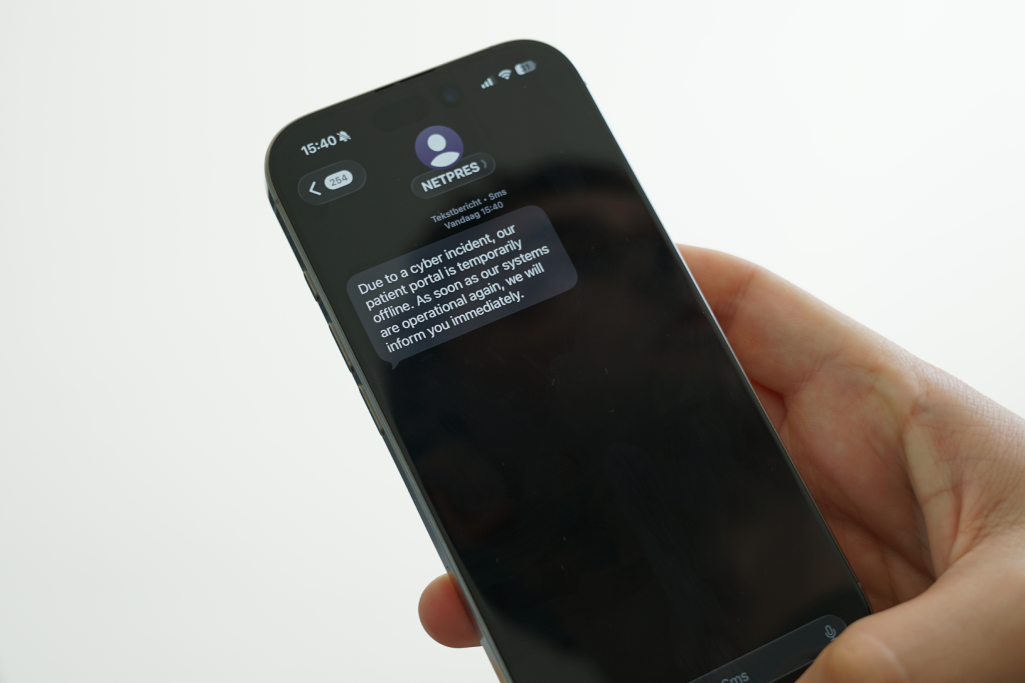
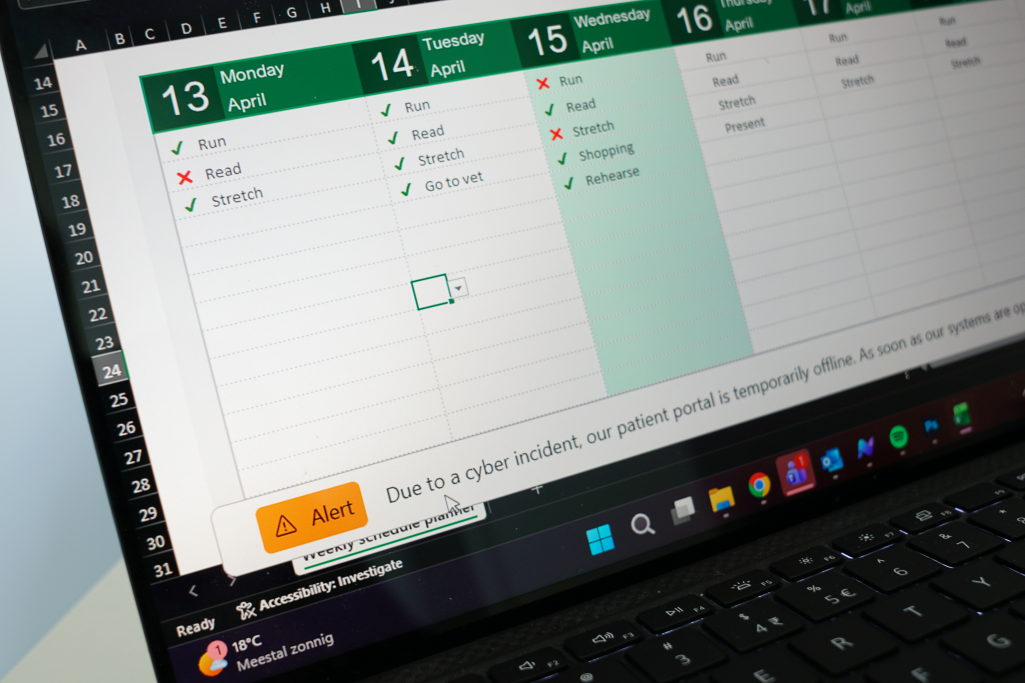
Effective crisis communication aligns with the working behavior of employees. This means communicating via the channels that different types of employees see during their workday. For communication via PCs, think of the Desktop Ticker and Desktop Alerts, Screensavers, and Lock Screens. To also reach those without a PC, there is Digital Signage on TV screens throughout the organization, and an app or SMS messages on mobile phones. By combining these channels intelligently, communication becomes visible in the direct working environment of every employee. Information no longer needs to be actively sought, but is automatically shown at the moments and places where people are already looking.
Speed, targeting, and repetition make the difference
In a crisis, every minute counts. Organizations must therefore be able to rely on communication that reaches employees immediately, without depending on their own actions. Push communication is essential here: alerts on TV screens, PCs, and mobile devices, or a ticker with breaking news ensure that important information is immediately visible. Push notifications and pop-ups draw immediate attention, while read confirmations provide insight into reach and follow-up. Attention boosters and targeted messaging ensure that critical information stands out and only reaches the right audience.
At the same time, repetition is crucial to ensure that a message truly lands. It is not about a single moment of sending, but about remaining continuously visible until the information has been received. By structurally displaying messages via, for example, Screensavers on PCs and Digital Signage on TV screens, one central and up-to-date information flow is created. This reduces noise, decreases dependence on pull channels, and ensures that communication is actually seen and remembered by everyone.
Will your communication still work when everything stops?
The question is not whether you should communicate during a cyber incident, but whether you can actually do so effectively when it matters most. Because precisely when systems fail, communication must continue to function.
Do you want to experience how you can reach all your employees within minutes, regardless of location or device? Request a demo and discover how Netpresenter helps your organization remain visible and in control, even in crisis situations.